Tuesday, January 2, 2018

E-Cigarette Usage May Complicate Dental Surgery

E-Cigarette Usage May Complicate Oral Surgery

 22 Nov 2017   
 6180 times
E-Cigarette Usage May Complicate Oral Surgery
Electronic cigarettes often are marketed as a “safer” alternative to traditional tobacco products. Yet they are still packed with nicotine, which inhibits wound healing, increases the risks of anesthesia, and may lead to other complications during and after surgery, according to the American Association of Nurse Anesthetists (ANNA).
With these potential dangers in mind, ANNA encourages patients to be completely honest about their health history with their surgeons, anesthetists, and other healthcare providers. Cathy Harrison, DNAP, MSN, CRNA, who has been a dental anesthesia provider for more than 17 years, recently shared her insights about e-cigarettes and oral health with Dentistry Today.
Q: What effect does e-cigarette use have on anesthesia during dental procedures and subsequent healing?
A: Anesthesia providers need to be aware that smokers, whether cigarettes or e-cigarettes, have very reactive airways. When patients are sedated, they may start coughing during the procedure. This also presents a hazard for the dentist, particularly in invasive procedures, such as when using a drill. 
Smokers may have other underlying issues, which can lead to complications. A thorough health history is important for the anesthesia provider to understand the patient’s health and adjust the anesthetic or sedation plan accordingly.  
Nicotine impacts the body’s ability to deliver oxygen to organs and tissues, which is very important to keeping organs viable. This also may lead to increased risk of infection. If your body is not using oxygen and promoting adequate circulation, this decreases the body’s capability to heal appropriately and increases the risk of infection.
Smoking also is a risk factor for periodontal disease, which can lead to bone loss and loose teeth. This is an important consideration for anesthesia providers who provide general anesthesia because there is a large population of smokers who need surgery.
Q: What guidelines should dentists give their patients for e-cigarette use before or after these procedures?
A: Though a longer period of cessation around anesthesia and surgery is most beneficial, even 12 to 24 hours can significantly increase the body’s ability to deliver oxygen to vital organs and tissues. Patients should be advised not to smoke or use e-cigarettes after dental procedures, particularly if they involved bone grafting, sinus lift, or extractions. The action of drawing on a vaping apparatus causes negative pressure, which can pull the clot from the extraction site and cause dry socket. This is extremely painful.
Q: What effects do e-cigarettes have on oral health overall?
A: Smoking is a significant risk factor for the development of periodontal disease and can lower the chances of successful dental treatment. Smokers have increased incidence of periodontal disease, which can lead to destruction of the gums, bleeding gums, tooth loss, and bone loss.
Patients with periodontal disease also have a higher incidence of cardiac disease, which is an important consideration for anesthetic management. Pregnant patients with periodontal disease also have a higher incidence of premature labor. Diabetics, who already have slowed wound healing, increase the risk of poor wound healing when they use cigarettes or e-cigarettes. 
Q: Should dentists advise patients to quit and provide assistance in doing so? 
A: It is always good practice for all healthcare providers, including dentists, periodontists, and anesthesia providers, to encourage their patients to quit smoking or vaping due to the correlation with periodontal disease, oral cancer, and many of the issues noted above. It is important to educate patients and involve them in the plan of care, thus helping then make better choices about their oral health.
Patient education is also critical, especially with e-cigarettes, because patients aren’t aware of the health effects. Vaping and e-cigarettes are perceived to be a safer alternative to smoking cigarettes. This is not the case. E-cigarettes contain nicotine and have many detrimental health effects on oral and overall health. The incidence of teenagers taking up vaping continues to increase, which is an unfortunate statistic that they are becoming addicted so early in their lives.  

Saturday, November 11, 2017

Nomination For Best Dentist & Best Cosmetic Dentist of Long Island


It has  been announced that I have been nominated  for the second year in a row  for the category for Best Dentist on Long Island. In addition we were nominated for a second category for Best Cosmetic Dentist on  Long Island. It is an honor and I greatly  appreciate the support from my wonderful patients for this nomination.
You can vote 1 time each day per category.
Click on the link below  and then go to the category of   Dentist and vote and also go to category of Cosmetic Dentistry .  I am grateful for your vote and support.

http://queenscourier.secondstreetapp.com/l/Best-of-Long-Island/Ballot/HealthWellnessampBeauty:


Thank You
Dr. Michael Kampourakis
886 West Jericho Turnpike
Smithtown NY 11787
631-462-2810

Dental Implants; Evaluating Your Options for Care

Dental Implants

Evaluating Your Professional Options for Care

Dental implant options for care.
Millions of people throughout the world now have a better quality of life because of dental implants. Dental implants are the only tooth replacement option that preserves bone and doesn't compromise the health of adjacent teeth — and they can potentially last a lifetime. Implants are today's preferred choice for restoring your natural smile with replacements that look, feel and function like natural teeth.
In Part One of our series we discussed the problems that follow tooth loss — the loss of alveolar (tooth-supporting) bone, changes to the face and jaws — and the subsequent impact on personal and social well-being. Maintaining alveolar bone is necessary for proper tooth replacement with dental implants, which are state of the art dentistry. We also considered other tooth replacement alternatives and why implants, long term, are the most cost effective.
In Part Two, we'll discuss the most suitable dental health professionals for both placing implants and fabricating the teeth that attach to them. We'll also give advice on where to go — and why, as well as when and how to make these important choices.
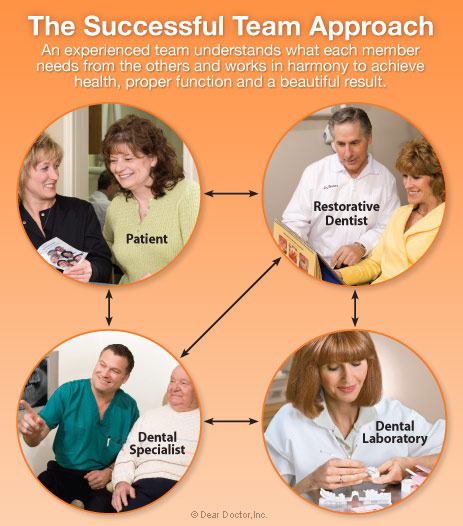
Figure 1: An experienced team understands what each member needs from the others and works in harmony to achieve health, proper function and a beautiful result.
Click to enlarge

Choosing the Right Dental Team for Successful Implant Treatment

What are the advantages of a team approach? Think of it this way: an experienced dental team is like a well-rehearsed and experienced orchestra — though each individual knows his particular instrument well, when they all play together in harmony with the other members of the orchestra, the end result is beautiful music [Figure 1].
Implants are normally placed by dental surgical specialists (periodontists and oral surgeons) and in some cases general dentists who have undertaken special training in implantology and surgery. Implant placement requires planning and involves collaborative efforts between the surgeon (dental specialist), restorative dentist (general dentist or prosthodontist) and dental laboratory technician who is responsible for building the crowns on successfully integrated implants.
Most often your general dentist is the place to start. Some general dentists will have more knowledge than others in the field of implant dentistry depending on their individual interest, knowledge and expertise. The responsibility lays with the general dentist in communicating his/her expertise and comfort level and referring you to specialists so that together you can make confident decisions.
Cat Scan technology.
Figure 2: CAT scan technology provides dentistry with images that allow for proper implant placement and safety.
Photo courtesy of Materialise Dental Inc.
The following is a general sequence of steps necessary in planning dental implant treatment so that your dental team has all the facts they need for your situation. This includes an assessment of your medical status and general health — to determine your fitness for surgery — and an examination of your overall dental health, including;
  • The site where the potential implant or implants are to be placed;
  • Study models (molds) of your teeth to assess your bite;
  • Photographs, especially if there is an aesthetic concern;
  • Special radiographs (x-rays) to assess bone quantity and quality [Figure 2];
  • Fabrication of surgical guides or templates to ensure accurate surgical implant placement.
This will provide answers to two critical questions necessary for successful implant treatment: Is there enough bone; and is it in the right place to allow tooth replacemen


Insufficient Bone — “Regeneration” In Our Generation

Sufficient bone volume for implant placement is vitally important to proper tooth placement resulting in both the most natural-looking and properly functioning tooth. Today there is general scientific agreement supporting the concept that when a tooth is removed a bone graft placed into the extraction site will minimize inevitable melting away of bone or “resorption.” Maintaining “bone volume” following removal of a tooth will facilitate implant placement in the best possible position.
Understanding the principles of wound healing now allows for regeneration of bone to occur using a variety of techniques. Most include opening the gingival (gum) tissues to expose the bone and then augmenting the existing or remaining bone by adding bone grafting materials to it. Healing of the bone can be enhanced by the utilization of membranes which cover the grafts and act like little subterranean band-aids to “guide bone regeneration.” Along with other biologically active molecules (found normally in the body) these techniques promote and enhance healing. In addition, excellent techniques exist for replacing and adding gingival gum tissues.
These surgical procedures are generally carried out by a periodontist or oral surgeon skilled and experienced in these techniques, especially in advanced situations. When creating new bone for implant placement, particularly in the upper jaw where sinuses are involved and bone grafting is necessary, these procedures are more predictably carried out in the hands of a specialist or a general dentist who has taken special and advanced training.
Cat Scan technology.
Figure 3: Using CAT scan technology, a dentist can verify that there is sufficient bone to place an implant in the right location for an aesthetically pleasing crown.
Photo courtesy of Materialise Dental Inc.

Implant Placement and Positioning

Sometimes described as “top down treatment planning,” the teeth to be replaced are recreated in a wax model form by a dental laboratory technician. The idea is then to establish the position of the underlying bone and to make sure the implant(s) is properly aligned (down) with the wax tooth form (top). The implant position can then be predetermined using a combination of specialized radiographs (x-rays) and imaging technology to assure success and in the process avoid major structures like nerves and air sinuses [Figure 3].
From this information surgical guides are made to assist the surgeon in precise implant placement; this in turn will assure the restorative dentist (general dentist or prosthodontist) that a crown will fit in the right position. If the bite will not accommodate implant placement, orthodontic treatment (braces carried out by an orthodontist) may be necessary to reposition teeth.
This process is analogous to the scuba diving adage, “Plan the dive and dive the plan.” A lot of preparatory work goes into initially deciding where an implant is going to be placed long before the actual surgery.
Finally, even with all the appropriate diagnosis and preparatory work, it's not a slam dunk — surgical know how does count. Surgical technique is in part an art, dependent upon proper knowledge, training and experience that can take years to acquire. It really comes down to this: every expert is an artist in his/her own field. Working on his/her particular canvas with all the appropriate information and experience at hand, the surgeon creates a work of art using materials with which he/she is most familiar.t with an implant?

Crown Manufacture and Placement

After the successful osseointegration (osseo – bone, integrate – join or fuse with) of the implant(s) to the jawbone your general dentist or prosthodontist (crown and bridge specialist), together with a skilled laboratory technician, will make a crown to fit on top of the implant that will precisely mimic a normal tooth both in form and function. Even this is not a simple task. It requires accurate record-taking and the transfer of this information to the dental laboratory for “abutment” fabrication (the part that fits into the implant and holds the crown in place). The crown of the tooth is then made of porcelain-like materials that look and function exactly like natural teeth. Implant success rates are extremely high and give patients many years of function and satisfaction.

Questions to ask your dentist

Doctors who are actively involved in implant dentistry should be more than willing to provide patient testimonials and references, as well as before and after photos of their cases. Also, ask about membership in professional associations related to implant dentistry. It does not certify proficiency, but it is a statement of commitment to this growing area of dentistry.
  1. If the doctor who is surgically placing the implants is an oral surgeon or a periodontist, they have had a residency program in surgical procedures as part of their training. Pose the following questions to assist you in selecting the right option for implant treatment:
    • How long have you been placing implants, and how many implants do you place each year?
    • Do you have before and after photos to show the results?
  2. If a general dentist will be placing the implants, ask them the following questions about training:
    • How many surgical training courses have you taken?
    • Do you routinely attend continuing education courses on implants?
  3. If your treatment plan requires procedures to enhance the final aesthetic and functional results, such as bone augmentation, ask how many of these procedures the doctor has performed.

Technical Challenges — Aesthetic Areas and “Teeth In A Day”

Achieving acceptable aesthetic results with implants is most challenging in highly visible areas like the front of the mouth, particularly in people who show not only teeth but the gum tissues as well. In these cases the whole tooth/gum tissue complex must be recreated including the papillae, the pink gum tissues that fill the triangular spaces between healthy teeth. It's at this point where knowledge and experience really come to the forefront.
There is a lot of advertising about “teeth in a day” where implant results can seemingly be achieved in a lot less time. In the right circumstances where multiple implants replace missing teeth, and where crowns (the portion of the teeth you see in the mouth) can be attached to them in such a way as to prevent any movement, “teeth in a day” is a possibility. This is accomplished by “splinting” the crowns to multiple implants — a precise fitting splint that keeps them movement free. However, this still requires multiple appointments for proper assessment, diagnosis and treatment-planning prior to “teeth in a day.” It also requires experience, great precision and care.
In some instances implants can be placed directly into extraction sockets and occasionally temporary crowns placed simultaneously. This also includes single tooth replacement, but stabilizing an implant in this situation is even more precarious and critical for success.
Our advice can be distilled to this: successful dental implant treatment can't be accomplished overnight and shouldn't be hurried. Anyone who is serious about dental implant treatment should first secure the services of well-trained and experienced dental professionals. Embracing this prudent route will greatly enhance the chances of a successful outcome.(Continued)

Frequently Asked Questions (FAQ)

  1. Where should I go to start the process of considering dental implants?
    The time-honored starting point is your general dentist, the professional on the front lines who is in the best position to preliminarily assess all your dental needs. It is then his/her responsibility to refer you to the appropriate specialists who, in the context of a team, can help you make the right choice for your health, appearance and well-being.
  2. What is the responsibility of a dentist when you visit his/her office?
    Every licensed dentist is responsible for a complete examination of your oral and dental condition even outside the confines of his/her specialty if they are dental specialists. They are also responsible for communicating their findings and your treatment needs to you. Any dentist, whether a general dentist or specialist, has to first examine your overall oral and dental condition, even if they only want to place implants. It is their medical and legal responsibility.
  3. How do I know if my general dentist is qualified to do dental implants?
    Your general dentist is responsible for diagnosing and maintaining your overall oral health. With so much new knowledge and science to keep up with he/she may have varying levels of knowledge in specialty areas like implants. You have to do your due diligence. Trust is the most important aspect of the doctor/patient relationship. If you're not comfortable you must ask the necessary questions to assure you are.
  4. What should I know and be told before I undertake dental implant surgery?
    Your dentist or specialist is required to review an informed consent procedure. This is to establish that you have been told and are comfortable with all the risks, benefits and alternatives of the procedure(s) being recommended. You will be asked to sign an informed consent form, a copy of which becomes part of your medical record together with a copy for you.
  5. Implant “Super Centers” have been opening in my area advertising that they are the experts in dental implant treatment. What about them?
    This new concept is based on the premise that if the surgical specialist, the restorative dentist and the dental laboratory technician are under the same roof, implant treatment is more “convenient” for patients. While it is more convenient to have treatment completed in one location, the most important consideration should be whether or not the implant center has doctors with the experience and skill to provide the best possible aesthetic and functional results for each individual patient. When considering a procedure that involves surgery and impacts overall health, appearance and well-being, expertise should outweigh convenience. Avoid the traps of advertising hype by asking the right questions.
  6. Can you tell me more about “teeth in a day” advertisements?
    Some implant centers advertise “teeth in a day,” implying that anyone can get their replacement teeth in one day, or even in just an hour. Unfortunately, relatively few patients are candidates and the advertising creates false expectations for the typical dental implant patient. The fact is that even the patients who qualify for this procedure do not actually receive their replacement teeth in one day. There is preliminary diagnostic work that is necessary prior to the “day” that they have treatment. And it's a very long day, for those that do qualify.
  7. There are general dentists and prosthodontists who promote that they provide both the surgical and restorative aspects of dental implant treatment themselves. Is this OK?
    It is important for you to determine — and for them to tell you — whether they are dental implant specialists or not. If they do decide to do implants, they must have taken extra training to be proficient in implant treatment as required by law to treat to the same standard as specialists. It is their responsibility to tell you that you have the right to see a surgical specialist if you prefer.


Saturday, October 21, 2017

Oral Health:The Mouth-Body Connection


Oral Health: The Mouth-Body Connection


Years ago, a physician who suspected heart disease would probably not refer the patient to a gum specialist. The same went for diabetes, pregnancy, or just about any other medical condition. Times have changed. The past 5 to 10 years have seen ballooning interest in possible links between mouth health and body health.
"Physicians are taking a more holistic approach to their patients’ overall health," says Sally Cram, DDS, PC, consumer advisor for the American Dental Association. And for good reason. In one recent study, people with serious gum disease were 40% more likely to have a chronic condition on top of it.
In this article, WebMD answers two questions about the mouth-body connection. Why can the health of your mouth affect your whole body? And why are simple habits like daily brushing and flossing more important than you might think?

Your Mouth, the Gateway to Your Body


To understand how the mouth can affect the body, it helps to understand what can go wrong in the first place. Bacteria that builds up on teeth make gums prone to infection. The immune system moves in to attack the infection and the gums become inflamed. The inflammation continues unless the infection is brought under control.
Over time, inflammation and the chemicals it releases eat away at the gums and bone structure that hold teeth in place. The result is severe gum disease, known as periodontitis. Inflammation can also cause problems in the rest of the body.

Oral Health and Diabetes


The working relationship between diabetes and periodontitis may be the strongest of all the connections between the mouth and body. Inflammation that starts in the mouth seems to weaken the body’s ability to control blood sugar. People with diabetes have trouble processing sugar because of a lack of insulin, the hormone that converts sugar into energy.
"Periodontal disease further complicates diabetes because the inflammation impairs the body’s ability to utilize insulin," says Pamela McClain, DDS, president of the American Academy of Periodontology. To further complicate matters, diabetes and periodontitis have a two-way relationship. High blood sugar provides ideal conditions for infection to grow, including gum infections. Fortunately you can use the gum disease-diabetes relationship to your favor: managing one can help bring the other under control.

Oral Health and Heart Disease


Though the reasons are not fully understood, it’s clear that gum disease and heart disease often go hand in hand. Up to 91% of patients with heart disease have periodontitis, compared to 66% of people with no heart disease. The two conditions have several risk factors in common, such as smoking, unhealthy diet, and excess weight. And some suspect that periodontitis has a direct role in raising the risk for heart disease as well.
"The theory is that inflammation in the mouth causes inflammation in the blood vessels," says Cram. This can increase the risk for heart attack in a number of ways. Inflamed blood vessels allow less blood to travel between the heart and the rest of the body, raising blood pressure. "There’s also a greater risk that fatty plaque will break off the wall of a blood vessel and travel to the heart or the brain, causing a heart attack or stroke," Cram explains.

Oral Health and Pregnancy


Babies born too early or at a low birth weight often have significant health problems, including lung conditions, heart conditions, and learning disorders. While many factors can contribute to premature or low birth weight deliveries, researchers are looking at the possible role of gum disease. Infection and inflammation in general seem to interfere with a fetus’ development in the womb.

Though men have periodontitis more often than women do, hormonal changes during pregnancy can increase a woman’s risk. For the best chance of a healthy pregnancy, McClain recommends a comprehensive periodontal exam "if you’re pregnant or before you become pregnant to identify whether or not you’re at risk."

Oral Health and Osteoporosis


Osteoporosis and periodontitis have an important thing in common, bone loss. The link between the two, however, is controversial. Cram points out that osteoporosis affects the long bones in the arms and legs, whereas gum disease attacks the jawbone. Others point to the fact that osteoporosis mainly affects women, whereas periodontitis is more common among men.
Though a link has not been well established, some studies have found that women with osteoporosis have gum disease more often than those who do not. Researchers are testing the theory that inflammation triggered by periodontitis could weaken bone in other parts of the body.

Oral Health and Smoking


Not smoking is one of the most important things you can do for your mouth and your body. According to the CDC, a smoker’s risk of severe gum disease is three times higher than someone who does not smoke.
"Nicotine in cigarettes causes blood vessels to constrict," McClain tells WebMD. This interferes with your gums’ ability to fight infection. Not only that, smoking interferes with treatment -- gum surgeries tend to be more complicated and recovery more difficult.

Oral Health and Other Conditions


The impact of oral health on the body is a relatively new area of study. Some other mouth-body connections under current investigation include:

The Bottom Line on Oral Health


One thing is clear: the body and mouth are not separate. "Your body can affect your mouth and likewise, your mouth can affect your body," says McClain. "Taking good care of your teeth and gums can really help you live well longer." This means brushing twice a day, flossing once a day, and going for regular dental cleanings and check-ups.
Cram stresses the importance of letting your dentist know your full family medical history. And, she adds, "if you have periodontal disease, make sure you see your dentist frequently and get it treated promptly, before it progresses to the point where you begin losing teeth or it starts to affect your overall health."

Thursday, July 6, 2017

The Best Home Remedies for Dental Pain

Got a toothache, jaw pain, or an agonizing canker sore? To ease the ouch, look no further than your kitchen cabinet.


Toothaches may be small in size — but they can cause a colossal amount of pain.
. If you have a severe or persistent toothache or other mouth malady, you should visit your dentist in case it’s a serious dental health issue that needs treatment.
However, some minor toothaches and pains can be treated right at home (or at least mitigated while you wait to see your dentist). Next time your mouth is troubling you, give these home remedies a shot.


Toothache Cures From Your Kitchen Cabinet

Grab some clove oil. Oil of clove is an age-old home remedy. It works thanks to the chemical eugenol contained in the oil, which has anesthetic and antibacterial properties. To use it for tooth pain, soak a cotton ball with a mixture made of two to three drops of clove oil and ¼ teaspoon of olive oil. Put the cotton ball in your mouth near the tooth that hurts and bite down to keep it in place. One caution: Don’t go to sleep with the cotton ball still in your mouth. The FDA no longer considers this treatment effective enough to recommend it, although some dentists still believe it has benefits.Clove oil is available at pharmacies and health food stores.
Flush it out. Sometimes, the root of your toothache is food that’s trapped between your teeth. In this case, try flossing, rinsing with mouthwash, or using interdental brushes (small brushes shaped like Christmas trees that work between the teeth). In fact, this home remedy can save you a trip to the dentist’s office — but if food is constantly getting stuck in your teeth, talk to your dentist, because there could be an issue with your gums that needs medical attention.
Try these other kitchen staples. Some other home remedies that have proven to help toothaches include applying a hot tea bag directly to the tooth. Tea contains tannic acid, which reduces swelling. Other solutions: A cucumber slice placed on the tooth or a cotton ball soaked in brandy - alcohol has numbing properties, too. Some people also report that garlic, onions, spinach, wheat grass, or a simple salt water rinse relieves tooth pain.
Home Remedies for Your Other Mouth Maladies
Canker sore? Use these OTC concoctions. Canker sores usually go away on their own — but the pain can be excruciating in the meantime. While you’re waiting for one to heal, you may find relief by applying a mixture of half hydrogen peroxide and half water to the sore with a cotton swab, then follow with a dot of Milk of Magnesia; you can repeat this up to four times a day. Another home remedy to try is a mixture of equal parts Milk of Magnesia and liquid Benadryl; gently swish the mixture around your mouth for 60 seconds and then spit it out.
Sensitive teeth? Try this toothpaste. If your tooth feels sensitive to pressure, or when it’s exposed to hot or cold temperatures, whitening toothpaste is a no-no (it can just make your teeth more sensitive). Instead, try this simple solution: Switch to a no-frills toothpaste or consider buying toothpaste made especially for sensitive teeth, Dr. Dodes says. “They have chemicals in them that desensitize the tooth,” he explains. If sensitivity persists, talk to your dentist, who can investigate the cause.
Got jaw pain? Eat this. Until you can get an appointment with your dentist to check out your jaw pain — or while you wait to see if the pain resolves on its own — switch to a diet of softer foods. “Don’t eat big, overstuffed sandwiches or hard bagels,” Dodes says. “Give yourself five or six days of eating a soft-food diet and see if it gets better. If you twisted your ankle, you wouldn’t run hurdles, would you? If it hurts, give it a break.” Just be sure to call your dentist if the jaw or tooth pain doesn’t go away.
Got swelling? Take these steps. Mouth pain is sometimes caused by swelling of soft tissues in the mouth. Swelling should be checked by a dentist because it could be a serious dental health issue, Dodes says. In the meantime, try taking an over-the-counter anti-inflammatory medication such as ibuprofen (Advil or Motrin). “Still, if you’re in enough pain that you need a pill,” Dodes says, “you better get to a doctor because dental pain tends to get worse and worse.”
Broken tooth? Do this ASAP. If you break a tooth, get to your dentist as soon as possible — this pearly-white problem needs immediate assistance. If you find the piece of tooth that broke off, you can preserve it at home by putting it in water or milk — don’t leave it on a counter, for instance, and never scrub it with cleanser, Dodes says. Sometimes dentists can bond the tooth back on. “By putting it in milk, you’re helping to keep the cells alive so that they will re-grow when it’s reattached.”