Monday, August 1, 2016

Importance of Athletic Mouthguards


Athletic Mouthguards: Indications, Types, and Benefits


More than 5 million teeth are avulsed each year due to sports injuries and trauma,1 and in certain cases these avulsions can be attributed to the absence of a mouthguard or to improperly fabricated and fitted mouthguards. Not only do mouthguards protect the teeth, but they also protect the head against a blow to the jaw that can result in a concussion and loss of consciousness. This article will review the indications for athletic mouthguard use, types of mouthguards, and benefits to the wearer.
MOUTHGUARDS AND INJURY PREVENTION

Dental injuries are the most frequently incurred orofacial injuries from sports activities.2 In addition to injuries to teeth that may result in pulpal injury and the need for endodontic treatment or loss of teeth, an impact to the base of the skull via a blow to the chin in a vertical direction may result in concussion. In both types of injuries, use of a mouthguard could have a significant preventive role. Heintz3 and Chapman4 confirmed that properly fabricated, custom-fitted mouthguards reduce the incidence of concussion as well as dental and mandibular jaw injuries. Masahiro et al5 reported that mouthguards relieve the stress concentrated on the anterior teeth in a frontal collision by absorbing and dispersing some of the shock energy, quickly stopping the vibration of the maxillary teeth.
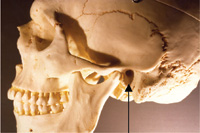
Figure 1. Any trauma to the mandible can cause the condyles to be displaced upward within the glenoid fossa, thereby causing trauma to the base of the skull. A concussion can result. (Courtesy: International Academy for Sports Dentistry.)
Research from Bloorview MacMillan Children’s Center and the Hospital for Sick Children6indicates that the various types of sports injuries create a need for sports-specific models of mouthguards, stating that the injuries associated with basketball (eg, elbows impacting the maxillary jaw, loosening a tooth) are different from baseball (eg, ball impacting the teeth) and different from horseback riding (eg, teeth driven up into the jaw from the impact of a fall). Based on how the mandibular condyle articulates within the glenoid fossa, these different types of trauma have different clinical implications, and different types of mouthguards may prevent or minimize resultant injuries (Figure 1).
Unfortunately, the public is largely uninformed about the serious consequences of sports trauma as well as methods of prevention. Trauma resulting from orofacial sports injuries can range from the considerable pain and expense in replacing a lost tooth to the greater impairment and cost resulting from a concussion that can end a sports career. Parents, athletes (professional and nonprofessional), coaches, and trainers largely minimize and deny these consequences, perhaps as a defensive mechanism to protect psychologically against the possibility of an injury. A survey by Karl7 reported that even in the National Hockey League, only 51.6% of NHL players wear a mouthguard. It is understandable that it may not be possible to force a professional athlete to wear a mouthguard, but it is unfortunate that owners and the league administration do not educate the players and then make mouthguards mandatory, as are protective helmets in hockey.
FUNCTIONS OF MOUTHGUARDS

In their book Textbook and Color Atlas of Traumatic Injuries to the Teeth, Andreasen and Andreasen8 list 8 basic mouthguard functions:
(1) Mouthguards prevent laceration and bruising during impact by acting as a buffer between the soft tissues of the lips and cheeks and the teeth.
(2) Mouthguards prevent tooth fractures or dislocations by cushioning the teeth from direct frontal blows while redistributing the forces of impact.
(3) Opposing teeth are protected from seismic contact with each other.
(4) The mandible is afforded elastic, recuperative support that can prevent fracture or damage to the unsupported angle of the lower jaw.
(5) Mouthguards help reduce neurologic injury by acting as shock absorbers between the upper and lower jaws. Without a mouthguard, the trauma of the jaws violently jarring together can distribute the impact from the condyles of the mandible against the base of the skull, resulting in concussion.
(6) Mouthguards can provide positive reinforcement in the prevention of neck injuries.9
(7) Mouthguards provide a psychologic benefit to athletes. Findings suggest athletes feel more confident and aggressive when they have the proper protection.10
(8) Mouthguards fill edentulous spaces and thereby help support adjacent teeth. This allows removable prostheses to be taken out during athletic competition.
Facts from the National Youth Sports Foundation for Safety11,12
(1) An athlete is 60 times more likely to sustain damage to the teeth when not wearing a protective mouthguard. Mouthguards and faceguards prevent an estimated 200,000 high school and college football injuries.
(2) The cost of replanting a tooth and follow-up dental treatment is estimated to be approximately $5,000. Individ-uals who experience an avulsed tooth that is not properly preserved or replanted may face lifetime dental costs of $15,000 to $20,000 per tooth.
(3) Each athlete involved in a contact sport has about a 10% chance per season of an orofacial injury, or a 35% to 56% chance during his or her athletic career. Approximately one third of all dental injuries are sports related.
(4) Every year hospitals in the United States see thousands of cases of lost or damaged teeth as a result of sports injuries. Treating these injuries can cost thousands, even tens of thousands of dollars per individual.6
(5) The total cost to replace an avulsed tooth (complete displacement of the tooth out of its socket) can be 20 times more than the cost of a custom-fabricated mouthguard.13
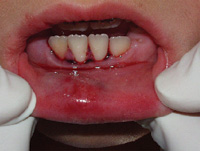
Figure 2. Trauma to the mandibular teeth during athletic competition. Mouthguard was not worn.
(6) The ADA recommends wearing custom mouthguards for the following sports: acrobatics, basketball, boxing, field hockey, football, gymnastics, handball, ice hockey, lacrosse, martial arts, racquetball, roller hockey, rugby, shot-putting, skateboarding, skiing, skydiving, soccer, squash, surfing, volleyball, water polo, weight lifting, and wrestling. There are newer sports such as rollerblading, mountain biking, and skateboarding, or sports such as racquetball and gymnastics, in which wearing a mouthguard may prove beneficial. With their increased participation in sports, female athletes need the protection a mouthguard offers (Figure 2).
CONCUSSION
The most serious and life-threatening consequence of orofacial sports trauma is a concussion. During contact sports, blows of varying degrees are repeatedly delivered to the jaw and chin. The concussive vibration from these blows is conducted to the temporal bone of the skull, which contains cranial nerve trunks that exit the base of the brain and affect hearing, balance, and blood supply to the brain. The brain “floats” in cerebrospinal fluid and is protected by the skull. Unfor-tunately, the skull cannot protect or prevent the brain from incurring forces from a violent impact. The result is the chance of the brain rotating within the skull, causing a concussion.
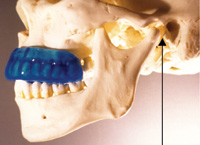
Figure 3. Custom mouthguards help protect the teeth while at the same time aid in diffusing the impact to the jaws by separating the mandible from the maxilla. The resulting separation within the glenoid fossa decreases the chance of concussive effects to the base of the brain. (Courtesy: International Academy for Sports Dentistry.)
A properly fabricated mouthguard covers and protects all of the teeth, especially the posterior teeth, with a prescribed thickness to diffuse impact to the jaw. The mouthguard separates the mandible and maxilla, thereby buffering the transmission of concussive effect to the base of the brain3,4 (Figure 3). The mouthguard also protects the anterior teeth from frontal blows by absorbing and dispersing the shock vibration that could cause severe damage to the maxillary anterior teeth.
Levels of Concussion
The American Academy of Neurology (AAN) categorizes concussions into 4 grades. Robert C. Cantu, MD,14 chief of neurosurgery service and director of service of sports medicine, Emerson Hospital, Concord, Mass, developed this system. Dr. Cantu has 30 years of experience as a neurosurgeon and football team physician.
Asymptomatic: no head-ache or dizziness and no impaired orientation, concentration, or memory during exertion.
Grade 1 (mild): no loss of consciousness (LOC); post-traumatic amnesia (PTA) less than 30 minutes.
Grade 2 (moderate): LOC less than 5 minutes or PTA greater than 30 minutes.
Grade 3 (severe): LOC greater than 5 minutes or PTA greater than 24 hours.
Consequences of Concussion
(Guidelines for Grades 1 to 3 According to AAN)
Although loss of consciousness is not a prerequisite of concussion, CT scanning should be performed, as this is the most sensitive and specific mode for identifying such injuries. Plain radiographs are not specific enough to determine the level of damage. For those people who are asymptomatic from the initial, minimal force with no intracranial hemorrhage, the long-term chance exists for subtle abnormalities in specific cognitive function.15
Grade 1 Concussion. Re-turn to play after 15 minutes if the athlete shows complete recovery (no symptoms at rest or with exertion). The injured player should be examined immediately and at 5-minute intervals until the symptoms disappear. A second Grade 1 concussion in the same game should result in the player leaving the game for its duration. Before the player can return to competition, the player should show no symptoms at rest and exertion for a week and should also receive a neurological exam.
Grade 2 Concussion. Not allowed to return to play again that day. The player should be examined at frequent intervals. A trained person should re-examine the player the following day. Before the player can return to competition, the player should show no symptoms at rest or exertion for a week and should receive a neurological exam. A second Grade 2 concussion requires no symptoms at rest or exertion for 2 weeks with a neurological examination.
Grade 3 Concussion. Taken by ambulance to the nearest emergency department if still unconscious or if worrisome signs are detected  such as a vacant stare, delayed verbal or motor responses, confusion or inability to focus, slurred speech pattern, or any loss of conciousness. A thorough neurological examination, including a CT scan, should be performed promptly with admission to the hospital on signs of pathology such as diffuse swelling of the brain, small subdural hema-toma, and/or elevated intracranial pressure, or if the player's mental status remains abnormal. If a player experiences a Grade 3 concussion, that player should not return to play until there are no symptoms at rest or exertion for 2 weeks. The player should also receive a neurological examination. A second Grade 3 concussion requires rest for at least 1 month.
BASIC TYPES OF MOUTHGUARDS16
Mouthguards are available in 3 basic types:
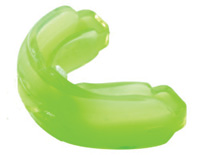
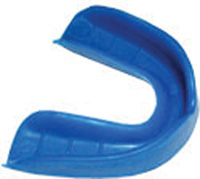
Figure 4. Stock mouthguard.
(1) Stock. For sale in sporting goods and department stores, stock mouthguards are the least preferred type. These devices are the least expensive, least effective, and are only available in a limited number of sizes. For comfort, they are often modified by the athlete for better fit. This can negate their usefulness (Figure 4). Stock mouthguards have been shown to provide only a low level of protection.17 If the wearer is rendered unconscious, the mouthguard may become unseated and cause an airway obstruction.18 In 1997, Division III football players were wearing stock-grade mouthguards that did not provide support for posterior teeth. Further, athletes were buying these poor-quality appliances and trimming them to improve speech and breathing. It was noted that these athletes sustained concussions while wearing the mouthguards. As a result, the Academy for Sports Dentistry (now called the International Academy for Sports Dentistry) formulated a position statement defining a “properly fitted mouthguard” with adequate posterior support. That statement has helped to educate athletes and trainers/coaches regarding what is meant by a proper mouthguard.19
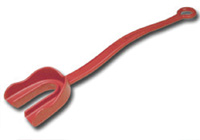
Figures 5 and 6. Boil-and-bite mouthguards.
(2) Boil and bite. Most commonly used, these mouthguards do not provide the proper thickness, comfort, or critical protection of the posterior teeth. They are made of a thermoplastic material that when immersed in boiling water can be fit and formed in the mouth with the use of the lips, tongue, cheeks, and biting pressure. Often, because of the inaccurate fit, clenching pressure is required to obtain satisfactory retention (Figures 5 and 6).
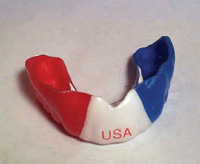
Figure 7. Custom mouthguard in various colors.
(3) Custom made: Designed by a qualified dentist, these mouthguards provide comfort, correct thickness, and maximum protection of all teeth, including the posterior teeth (Figures 3 and 7). They are designed with consideration of the patient’s dental history, and may be designed for a particular sport and with full knowledge of any past history of concussion. For example, if the athlete plays a sport such as tennis, which does not entail a high degree of traumatic contact, then the design of the mouthguard can be constructed with a thinner layer of ethylene vinyl acetate (EVA). For a single-layer mouthguard (approximately 0.08 inches [2 mm]) thick, EVA is used in a vacuum machine. This type of mouthguard would be best suited for those who participate in noncontact sports. The dentist can fabricate them directly in-office or send them to the laboratory. Multiple-layer mouthguards (approximately 0.15 inches [4 mm] or thicker) are also constructed by pressure lamination. These types of mouthguards are made by using multiple sheets that are laminated upon one another over a cast of the athlete’s teeth using heat and high pressure. The pressure enhances the accuracy of the lamination process. These mouthguards are constructed by a dentist in-office or by a dental laboratory and are best suited for those who participate in heavy contact sports such as boxing.
SUGGESTIONS FOR INCREASING THE USE OF MOUTHGUARDS

It can be suggested that in order to increase the use of mouthguards during sports activities, professional athletes should serve as role models for young athletes, performing public service announcements promoting the use of properly fitting mouthguards. If the professional athlete suggests the use of this appliance, it would enhance the willingness of young athletes to follow that example. Professional athletes, team physicians, trainers, and team dentists should be advocates for the use of sports mouthguards.
Local dentists can also contribute by educating their communities, even by fabricating mouthguards for school teams at a low cost.
FUTURE RESEARCH

Study is underway at Ryerson University in Toronto to suggest new mouthguard designs based on analysis of the forces that can affect the jaws and teeth during sports contests. Using mathematical models and cadavers, the goal is to predict the stresses exerted on the jaws and teeth when protected by various experimental mouthguard designs. A crash “test jaw,” similar in principle to human-sized dummies used in the auto industry to test car safety, will be used in this research.6
CONCLUSION

Dental injuries are the most frequently occurring orofacial injuries in sports activities. Further, the most serious and life-threatening consequence of orofacial trauma is concussion. Not only do mouthguards protect teeth, but they also protect the head from blows to the jaw that can result in concussions and unconsciousness. This article has reviewed the indications for mouthguard use, the types of mouthguards, and benefits of mouthguard use.

Wednesday, July 20, 2016

Sugar Content of Fruit Juices & Smoothies

Fruit juices and smoothies have 'unacceptably high' sugar content

Published: Published: Sat 26 Mar 2016

The next time you offer your children a healthy smoothie instead of a soda, you may want to remember that it could contain as much as 13 g/100 ml, equivalent to around 2.5 tsps in a 3.5-oz serving, or approximately two thirds to a half of a child's recommended daily sugar intake.
[smoothie]
Smoothies can have a surprisingly high sugar content.
New research, published in the online journal BMJ Open, describes the sugar content of fruit drinks, natural juices and smoothies, in particular, as "unacceptably high."
According to Yale Health, the average American consumes around 22 tsps of added sugar every day; for teens, the figure is closer to 34. One 12-oz can of soda contains 10 tsps of sugar.
The American Heart Association (AHA) recommend no more than 3-4 tsps of sugar a day for children, and 5 tsps for teens.
In the UK, guidelines recommend a maximum of 19 g, or just under 4 tsps for children aged 4-6 years, and 24 g at age 7-10 years, or just under 5 tsps, according to the UK's National Health Service (NHS).
As awareness spreads about the impact of sweetened drinks on weight gain and tooth decay, many people are turning to fruit juices and smoothies as healthy alternatives to sodas, iced tea and other favorites.

Even 100% juice is not guilt-free

However, even 100% fruit juice is not as innocent as it seems. The American Academy of Pediatrics (AAP) recommend not giving juice to infants under 6 months, and children aged 1-6 should have no more than 4-6 oz, or one half to three quarters of a cup. The recommended amount for 7-18 year-olds is 8-12 oz, or 1-2 cups.
Researchers from the University of Liverpool and the University of London in the UK assessed the sugar content per 100 ml (approximately 3.5 oz) of fruit juice drinks, 100% natural juices, and smoothies aimed at children, using information from the pack label.
They checked the amount of "free" sugars in 203 standard portion sizes (200 ml, or around 7 oz) of UK-branded and store-brand products.
Free sugars include glucose, fructose, sucrose and table sugar, which are added by the producer, as well as naturally occurring sugars in honey, syrups, fruit juices and fruit juice concentrates. Although fructose occurs naturally in fruit, when consumed as a drink, it can cause dental caries - as can any other sugar.
There are other naturally occurring sugars in whole fruits and vegetables, which the body metabolizes differently, and they act to curb energy intake. These were not included.

Over 40% of drinks contain 4 tsps of sugar

The sugar content in the drinks surveyed ranged from 0-16 g/100 ml, and the average was 7 g/100 ml, or around 1.5 tsps. It was significantly higher in pure fruit juices and smoothies.
The average sugar content of the 21 pure fruit juices assessed in the survey was as high as 10.7 g/100 ml or just over 2 tsps, and in the 24 smoothies, it was up to 13 g/100 ml, or just over 2.5 tsps. Over 40% of all the products, contained 19 g, or around 4 tsps, of free sugars, the maximum daily amount recommended for children.
Around 78 products contained zero-calorie sweeteners, such as aspartame. While classed as safe, health experts say they are not helping children's taste buds to get used to a less sweet diet.
Based on the findings, the team recommends:
  • Not counting fruit juices, juice drinks and smoothies with a high free sugar content as one of the "5 a day"
  • Consuming fruit whole, not as juice
  • Diluting fruit juice with water or opting for unsweetened juices, and allowing these only during meals
  • Limiting intake to 150 ml/day, or just over 5 oz
  • Requiring manufacturers to stop adding unnecessary sugars to fruit drinks, juices and smoothies, if necessary, through government intervention.
Medical News Today asked Dr. Simon Capewell, who led the research, whether, in the light of these findings, we should reduce our fruit intake, too.
He told us:
"No. Fruit is very good for the health. Vegetables likewise. Indeed, we would recommend unlimited fruit and vegetables."
Whole fruit has a higher fiber content than juice, it takes longer to consume, it is more satisfying, and there is evidence that the body metabolizes whole fruit in a different way, adjusting its energy intake more appropriately than it does after drinking juice.
A limitation of the study was that researchers only looked at products that are available in supermarkets, and there may be alternatives with a lower sugar content.
MNT recently reported on research suggesting that health warnings on sugary drinks could encourage parents to think twice about getting them for their children

Saturday, May 28, 2016

Happy Memorial Day


Thank You to all our woman and men serving our country and protecting our freedoms!

Sunday, May 22, 2016

E-Cigarettes & Hookah Pens (Impact on Oral Health and Health Risks)

How e-cigarettes and hookah pens impact our oral health

E cig
With the recent popularity of the recreational use of e-cigarettes and hookah pens as a “healthier” decision to traditional cigarettes, consumers are falsely convinced there are no harmful effects to these water vapor alternatives. The notion that these products pose no threat (or a lesser threat than the accompanying two) has encouraged smokers, nonsmokers and young people to consume them. Some consumers have bypassed any further research on these water vapor products and have already allowed it to become a replacement to cigarettes.
If we allow ourselves to think back to the introduction of cigarettes, we might remember their impact on society and popular culture. At one time, it was hard to find someone who did not smoke (Mad Men, anyone?) and the possibility that these addictive trends would endanger our oral health was far from anyone’s mind. Smoking was glorified, but also underestimated, which is why people are now either looking to quit, looking for alternatives, or simply not looking to change despite the dangers smoking does to an individual’s oral hygiene.
Researchers have conducted experiments on e-cigarettes and found that e-cigarette consumers acquired higher levels of chemicals toxins contrary to being advertised as harm reducing. E-cigarettes, contrary to popular belief, do contain formaldehyde, propylene glycol , acetaldehyde, as well as carcinogenic chemicals that can lead to oral cancer. Unfortunately, the e-cigarette consumers unknowingly have a higher risk of consuming toxins and nicotine then the traditional cigarette consumer. The nicotine absorbency is high in e-cigarettes due to the higher concentrations in the cartridges which varies depending on brand.  A recent survey conducted by The Centers for Disease Control and Prevention (CDC) found that 6.8 percent of youth in grades 6-12 and six percent of adults consume e-cigarettes. That accounts for 14.5 million adults and approximately 5 million youth (Centers for Disease Control and Prevention, 2014). I have witnessed that it is becoming a frequent trend to use e-cigarettes and hookah pens at social events and many young adults are not educated on these products.
This poses the question: will these products dwindle the number of nicotine consumers or hinder the movement to make smoking unappealing? The answer, well, more time and research will tell.
It is difficult to ignore how these water vapor alternatives effect our oral health. Authentic cigarettes are forced to adhere to certain regulations unlike e-cigarettes and hookah pens which are sold over the counter and contain no labels. E-cigarette still contain nicotine which can be severely harmful and cause damage to the mouth, gums, and the tongue. The nicotine in these products can still cause gingivitis, periodontal disease, tooth decay, loss of teeth and dry mouth among other effects yet to be discovered. The U.S Food and Drug Administration (FDA) spoke out on e-cigarettes stating they contain a toxic found in antifreeze which can lead to cancer. People do not know that e-cigarettes contain many cancer-causing chemicals, one of them being nitrosamines.
These modern smoking crazes have been advertised as an alternative to the harmful ingredients in hookah and cigarettes, however, we cannot simply abide by these new alternatives and cease to question their impact on our oral health. The best alternative to maintaining oral health and the blueprint of our smiles is to avoid tobacco products entirely.


Friday, April 29, 2016

Oral Hygiene For Your Dog

Oral Hygiene and Your Dog's Health


By T. J. Dunn, Jr., DVM

It’s a fact. Most dog owners never take a good look inside their dog’s mouth. And that’s unfortunate because it is estimated that over 80 percent have significant oral pathology. Every day veterinarians are presented with patients for routine vaccinations or other minor afflictions whose oral health status is truly cause for alarm. Upon displaying the dog’s loose teeth, sore and infected gums, and rotting tooth sockets to the dog’s owner, the response usually is one of surprise and shock.

"Well, she does seem to have bad breath, Doctor" is the usual reply. "But I’m sure at her age she can’t have anything done now." My response is that the continual presence of bacteria and their associated toxins have a daily impact on the dog’s health; anything we can do to change that for the better is appropriate. Privately I’m thinking "How would you like that pathology going on in your mouth?"

Partly because the mouth is warm, moist and has significant nutrients present for organisms to grow on, the oral cavity of dogs is a perfect incubator for all kinds of bacteria. Most are normal and natural, but once plaque and calculus (tartar) form on the teeth the normal microbial flora gets out of balance — and if pathogenic organisms proliferate, trouble ensues.

Far too often veterinarians discover during the physical exam that their canine subject has a foul odor to the breath as a result of generalized periodontitis. But foul breath is a mere shadow of a much more insidious disease process. 

To help understand the topic of oral hygiene let’s take a look at a few basic definitions below:

DefinitionsClick on image for close-up
Gingivitis - inflammation of the gums. 
Periodontitis - a general term for a disease of the oral cavity that attacks the gum and bone and delicate tissues around the teeth. 
Pyorrhea - inflammation of the gums and tooth sockets, often leading to loosening of the teeth and accompanied by pus. 
Caries - an area of decalcification of the tooth enamel leading to cavities in the tooth. Caries are very rare in dogs. 
Plaque - the first buildup of material adhering to tooth enamel. Composed of a mix of intercellular matrix of bacteria, salivary polymers, remnants of epithelial cells and white blood cells, it can cause caries, calculi buildup and periodontal disease. 
Calculus (Tartar) - calcium carbonate and calcium phosphate combined with organic material, deposited on the surface of the tooth. 

ADVERSE EFFECTS OF POOR ORAL HYGIENE


I asked a Diplomate of the American Veterinary Dental College, Jan Bellows DVM, of Hometown Animal Hospital and Dental Clinic in Weston, Florida, about the adverse health impact chronic periodontal disease can have on a dog. This is what he had to say, "The toxins from periodontal disease are absorbed into the dog's blood stream. As the kidneys, liver, and brain filter the blood, small infections occur causing permanent and at times fatal organ damage. After periodontal disease is treated, and the owners give proper home care, most dogs respond wonderfully due to the decreased pain and infection."

The adverse effects of periodontal disease are due in part, as Dr. Bellows states, to the toxins the bacteria secrete and the damage these toxins cause to delicate kidney, cardiac, and brain tissue.  In addition, many veterinarians believe that actual bacterial colonies can spread via the circulation and set up housekeeping within the animal’s tissues, commonly in the heart valve areas, kidneys and liver. Far better than extracting teeth, performing gingival flaps, filling erosions or doing root canal procedures, would be to prevent the health damaging periodontal disease in the first place.

VETERINARY DENTISTRY


Since most dogs presented with advanced periodontitis are older canines, owner concern regarding the safety of dental procedures always seems to be an impediment to performing dental procedures, especially since anesthesia is an important aspect of a thorough dental cleaning.

"Age," as Dr. Jones said, "is not a disease, and senior citizen dogs that are otherwise healthy are generally able to tolerate anesthesia for an elective procedure. Even though anesthesia safety will continue to improve, there will never be a time when there is no risk. The question is really whether the level of risk is appropriately measured against the damage to the dog’s quality of life if it does not have a dental procedure."

Dr. Jones also points out that in modern veterinary practices the anesthetics utilized are markedly safer than those used 15 or 20 years ago and patient monitoring during anesthesia has become quite sophisticated. The use of intravenous fluids during the procedure, warmed surgical surfaces to keep the patient’s body temperature stable, and preanesthetic blood chemistry evaluation all improve the opportunity for the patient to benefit from the dental procedure.

PREVENTION


One of the best ways to insure optimum oral health is to provide the dog with a well-balanced, meat-based dog food. Meat assists in keeping the mouth environment healthy. Actively encouraging the dog to utilize chew treats that require some "exercising" of the teeth, such as is provided by compressed rawhide chewies, hard rubber or nylon chew toys, can assist in keeping the mouth structures vital.   Brushing the dog’s teeth can be a big help, too, but needs to be done almost daily.  

One study in the Journal of Veterinary Dentistry, December, 1996, reported "Tooth-brushing every other day did not maintain clinically healthy gingiva in dogs. The daily addition of a dental hygiene chew to a regimen of tooth brushing every other day reduced the gingivitis scores and reduced the accumulation of dental deposits (plaque, calculus and stain). Daily tooth-brushing should be the recommendation to the dog owner irrespective of dietary regimen."

Newer dental care products that include antiseptic impregnated chewies, canine appropriate tooth brushes, and even flavored tooth pastes to "reward" the dog for allowing the brushing, are available online and in pet supply stores or veterinary hospitals. Also important are routine oral hygiene visits where under light anesthesia the patient can undergo ultrasonic teeth cleaning, close inspection of teeth and gingiva, and assessment of overall oral health. 

Addressing problems when they are minor and preventing the health damaging effects of bacterial contamination and systemic toxin release are immeasurably beneficial to the dog’s long-term health status.

The increase in number of Specialists in Veterinary Dentistry such as Dr. Bellows attests to the fact that we dog owners need to pay closer attention to our dog’s oral health status. And that begins with the simple task of looking closely at the dog’s mouth.

Dr. Bellows neatly sums up the need for optimum oral health throughout a dog’s life by telling me this, "When a client asks me how long their puppy will live, I usually respond 15-17 years if you brush their teeth daily … 11-13 years if you don't."

If that doesn't convince you, I don't know what will.

Monday, March 14, 2016

Importance of Baby Teeth

Healthy teeth and gums are vital to children’s general health. Good dental care should start even before those first baby teeth arrive. But how do you clean those tiny gums and teeth?

Baby teeth development

Baby teeth develop while babies are still in the womb. Newborns have a full set of 20 baby teeth hidden in their gums.
Most baby teeth appear between 6 and 10 months. In some children, teeth appear as early as 3 months. In others, they don’t arrive until around 12 months. Children get teeth at different times. A very small number of children are born with 1-2 teeth.
Baby teeth can arrive in any order, although the central bottom teeth are often first. All 20 baby teeth will usually arrive by the time your child is three years old.
The 32 adult teeth replace the baby teeth between the ages of 6 and 20 years. You can’t replace these teeth, so you have to look after them.
Diagram of baby teeth and adult teeth positions 

Teething

As each baby tooth gets to the surface of the gum, the gum opens up to show the tooth.
Many people think that ‘teething’ babies:
  • cry a lot or seem extra cranky
  • don’t feed as well as usual
  • suck on objects such as toys, dummies and bibs
  • have more dirty nappies more often
  • pull the ear on the same side as the tooth coming through. 
These signs might be caused by teething – or they might just be a normal part of development or a result of minor infections and illnesses.
If your baby isn’t well, it’s always best to take her to the doctor, especially if she has a fever or diarrhea, or you’re worried about any other symptoms.
Babies sometimes rub their gums together when new teeth are starting to come through the gum. This isn’t usually a problem.
Things to try for teething
If you’re concerned about your baby’s teething, you can try:
  • gently rubbing your baby’s gums with a clean finger – make sure to wash your hands first
  • giving your baby something to bite on, such as a cold (but not frozen) teething ring, toothbrush or dummy
  • cooking mushier foods, which need less chewing
  • giving your baby something firm, like a sugar-free rusk, to suck on.
If your baby still seems unhappy or uncomfortable, it’s time to see your GP or child and family health nurse. Teething might not be the problem.
If your baby likes a dummy, don’t dip it in food and liquids such as honey and sugar. It’s also a good idea to encourage your baby to let go of the dummy after he’s about 12 months old.

Dental care for baby teeth and gums

You can start cleaning and caring for your baby’s gums well before the first tooth appears. A couple of times a day, just wipe her gums gently using a clean, damp face washer or gauze.
As soon as teeth arrive, you can clean them twice a day (in the morning and before bed). Wrap a clean, damp face washer or gauze around your finger and wipe the front and back of each of your baby’s teeth.
If your baby doesn’t mind, you can introduce a small, soft toothbrush designed for children under two years. Use only water on the toothbrush until your baby is 18 months old (unless a dentist tells you to do something else).
Once your child is 18 months old, you can use a pea-sized amount of low-fluoride toothpaste on the toothbrush.
Don’t use toothpaste with babies under 18 months of age (unless recommended by your dentist).
The best way to clean your baby’s teeth
  1. Place your baby in a position where you can see his mouth, and he feels secure.
  2. Cup your baby’s chin in your hands, with his head resting against your body.
  3. Clean his teeth using soft, circular motions.
  4. Lift his lips to brush the front and back of the teeth and at the gum line.
Keeping the toothbrush clean
After cleaning your baby’s teeth and gums, rinse the toothbrush with tap water.
Store the toothbrush upright in an open container to allow it to air-dry.
If other family members’ toothbrushes are stored in the same place, make sure the brushes don’t touch. This reduces the risk that decay-causing germs will travel between brushes and into your baby’s mouth. And there’s no sharing when it comes to toothbrushes! One for each family member is best.
You should replace toothbrushes every 3-4 months, or when the bristles get worn or frayed.

Early childhood decay

Early childhood caries (ECC) is a common and severe form of cavities found in very young children (0-4 years of age). Without treatment, decay can spread deeper into the tooth, causing pain and infection and even damage to the underlying adult tooth. The baby tooth or teeth may need to be removed. Unfortunately, because of their young age, children may require treatment under sedation or general anesthesia at a hospital.
If a baby tooth is missing too early other teeth may move into its space and block the way for the permanent tooth.

Contributing factors to early childhood decay:

  • Diets high in sugar
  • A high frequency of snacking and/or frequent meals as well as sticky and sugary snacks.
  • Sustained use of the baby bottle or sippy cup (especially at bed time)
  • Lack of tooth brushing and flossing
  • Limited access to fluoridated water

To prevent cavities:

  • Keep your child's teeth clean. This is the easiest way to keep teeth healthy.
  • Limit sugar filled foods and drinks (particularly for babies). Milk, juice and formula all contain sugar. Avoid using the bottle and sippy cup to sooth your child. Fill them with water instead.
  • Visit the dentist by age one or within six months of when you see the first tooth. Through regular examinations your dentist will monitor the development of your child’s teeth and gums to catch problems early and prevent disease.


Thumbsucking and Baby Teeth

Thumbsucking is a natural reflex for children. Sucking on thumbs, fingers, pacifiers or anything they can get their mouths on can help babies learn feel safe and secure. Thumbsucking is a soothing action for babies, and can even help them lull themselves to sleep.

Thumbsucking is all well and good, until your child’s permanent teeth come in. Then it can cause problems. Crooked teeth and bite problems can result from thumbsucking. Also, the roof of the mouth can become unnaturally constricted or elevated and the jaws may not develop properly. The intensity of sucking matters, too. Aggressive suckers may even develop problems with their baby teeth.

Children usually stop sucking their thumbs between the ages of two and four years old, or by the time the permanent front teeth are ready to erupt. Which is good news for those emerging adult teeth! But if you have trouble getting your child to stop thumbsucking, try the following tips.

How to stop thumbsucking:

  • Limit the time your child sucks their thumb to when they are in their bedroom or only during naptime

  • Praise your child for not sucking

  • If your child sucks their thumb for comfort, try to correct the cause of an anxiety

  • Recruit your dentist in encouraging your child to stop thumbsucking

  • Remind your child of their thumbsucking habit by putting a sock over their hand when they nap or sleep


Children Oral Hygiene & Diet

baby-teeth.jpgJust as it is for adults, good oral hygiene and a well-balanced diet are good for children. It’s good for their teeth and it’s good for their overall well being. And good habits start young. So gently clean your baby’s gums after every feeding and give your baby healthy foods.
Even though it may be tempting to let your child fall asleep with a baby bottle in their mouth, don’t. You may not be able to see any baby teeth in your child’s mouth, but they’re there. And they’re just as susceptible to tooth decay. So letting a baby fall asleep with a bottle full of breast milk, formula, juice or any sweet drink is like soaking those developing teeth in sugar. That wouldn’t be good for anyone’s teeth, especially your baby’s, and it can result in baby bottle tooth decay. Good oral health and diet is pivotal to establishing a lifetime full of happy, healthy smiles. All it takes is brushing, flossing, and eating right. The key is to start those positive habits at an early age.

Thursday, February 18, 2016

Canker Sores: Causes, Remedies & Prevention


The good news is that the pain and discomfort of canker sores can be reduced by readily available prescription and non-prescription treatments and home remedies.
Simple cases of occasional canker sores are self-limiting; they will heal over and disappear without intervention.
No remedies are proven to change the course of aphthous ulcers themselves or the recurrence of the condition - treatments mostly just reduce pain, discomfort and complication.
Few treatments marketed for aphthous ulcers have been the subject of robust clinical testing.
When the sores are not associated with other conditions, science has so far failed to explain what causes them, and their management is focused on treating symptoms, reducing inflammation, and promoting the healing process by countering secondary effects that could slow this down, such as bacterial involvement.

Home remedies for canker sores

Even before reaching for any one of a large array of pain-relieving mouthwashes, gels or tinctures that can be bought from stores, one home remedy that may be possible with items already perhaps in the bathroom cabinet has been suggested by the US Library of Medicine.
Mouthwash poured into a cap.
Mouthwash can be useful in the treatment of canker sores.
This procedure can be followed three or four times a day:
  1. Rinse with mild, over-the-counter mouthwash or salt water (with either, do not swallow)
  2. Make a mixture that is half hydrogen peroxide and half water
  3. Use a cotton swab to apply some of the mixture directly to the sore
  4. Finally, dab a small amount of milk of magnesia on the canker.
So-called alternative therapies may be worth trying at home. A review of the management of aphthous ulcers written for the journal American Family Physician, published in 2000, listed a number of options, although it noted that there had been no randomized controlled trials to robustly test safety and efficacy:
  • Anecdotes of relief and better healing from sucking on zinc gluconate lozenges (sold for the common cold)
  • Vitamin C, vitamin B complex and lysine "may speed healing when taken orally at the onset of lesions"
  • Sage and chamomile mouthwash 4-6 times a day may help - infuse equal parts of the two herbs in water
  • Echinacea (herbaceous flowering plant) may have an immune modulatory effect to reportedly speed healing
  • Carrot, celery and cantaloupe juices "have been reported as helpful."

Prescription therapies for canker sores

As mentioned at the beginning of this section on treatments, most aphthous ulcers are self-limiting, eventually healing without intervention. Treatment can only ease the pain and irritation, and help prevent complication.
More severe or persistent cases of canker sores need to be checked by a doctor to rule out associated conditions (such as inflammatory bowel disease, compromised immunity, allergies and nutritional deficiency) or to access prescription treatments. Again, any treatments aimed at the ulcers themselves are not certain to change their course but can ease the symptoms.
Antibiotics such as tetracycline may be prescribed to minimize inflammatory irritation by preventing bacterial aggravation.
Anesthetics, as well as being available in consumer products for canker sores, may also be prescribed as topical preparations to ease irritation and pain.
Other prescription treatments that may be used against problematic canker sores are tried empirically - without firm evidence, that is, but with the aim of seeing if they might help based on a theory (and assuming the safety considerations of prescribing the remedy).
The American Academy of Oral & Maxillofacial Pathology, for example, cites an association between recurrent cases of aphthous ulcers and an overactive immune system, so topical suppressant medications may help, such as locally applied cortisone.
With a similar mode - and again with limited evidence against aphthous ulcers - topical corticosteroids are a class of drugs often considered by doctors, including clobetasol ointment, dexamethasone rinse, fluocinonide gel (Lidex) and triamcinolone (Kenalog - in Orabase paste).
A bowl of curry.
Avoiding spicy foods can help prevent the aggravation of canker sores.
Side effects are an important consideration with prescription drugs, and doctors should help with weighing these up when considering any potential benefit in the more difficult cases of canker sores.
One possible side effect of using corticosteroids against canker sores is a fungal infection in the mouth.
Particularly severe or recurrent cases of aphthous ulcers may be referred to oral specialists, who may consider systemic rather than locally applied (topical) drugs. These specialists may also be needed to make a more specific diagnosis - some rare cases of recurrent aphthous ulcers are diagnosed as Sutton disease, for example.

Prevention of canker sores

The question of what can be done to prevent canker sores in the first place has no clear answer. However, there are ways to prevent aphthous ulcers from getting or feeling worse.
Prevent aggravation of aphthous sores by avoiding:
  • Abrasive foods or those that can stick in the mouth (potato chips, for example)
  • Spicy, acidic or hot foods and drinks
  • Traumatizing the ulcers (through harsh contact with toothbrush bristles, for example).